 There were 50-100 attendees at the Cell Press-sponsored Synthetic Biology conference at the University of California, San Francisco held on December 14, 2011. There was the usual acknowledgment of the field’s status (early-stage), potential impact (considerable), and articulation of what is needed (easy-to-use tools, reliable at-scale design and manufacturing processes, and standardized interoperable parts libraries) that has been typical at group gatherings (e.g.; SB 5.0) for the last few years. Also the point about a better marketing approach to attract scientists and public support to the field, something more enticing than the admittedly deadpan…
We pipette colorless liquids from one tube to another … we’re trying to cure cancer and change the world.
What was different was the degree of sophistication in the approaches, the easy multi-disciplinarity that researchers are bringing to the field, a more comprehensive understanding of the constituent materials (for example, the 5’ DNA does a lot of things: degradation, elongation, binding, etc. in a dynamic system where different processes come online to change resource use per osmolarity, temperature, etc.), and the contemplation of process portability across model organisms, for example from yeast to mammalian cells. The conference structure focused on the overall status and issues of the industry in a panel with leading scientists, and had talks regarding foundational technologies and applications.
Key points made by synthetic biology visionary Drew Endy (Stanford)- Biology is the best manufacturing partner we’ll find, it has taken over the earth; biology is interesting as both a type of inquiry (we don’t understand everything yet) and as a building material
- Design experts (e.g.; from RSID, the New School, etc.) should be brought into biological design
- Bio-manufacturing is big, but storing data in cells could be bigger
- Metrology advances are needed, in units, reference standards, etc.; for example when shipping a gene expression module to colleagues in Shenzhen, what units should be employed?
- 4-D space-time programming languages is an important new area, only six people worldwide are thinking about this so far
- We need to do regenerative medicine without scaffolds, we know biological cells can differentiate into 3-D, how can we engineer this to happen?
- Synthetic biology needs to expand beyond the few workhorse chemicals used all the time like theophylline and tetracycline
- An important application area is drug design since small molecules, the main current paradigm used in drug development, are limited by their surface area, where they can travel to in the body, and other internal properties
Key conference themesRNA as a programmable materialProgrammable materials are an important input to synthetic biology as they may allow ongoing control over the dynamic processes of living cells. RNA is exemplar as a programmable substrate since it can be used to sense the presence of small molecules in cells and control gene expression by influencing which proteins are made and many other cellular activities [1]. In the keynote talk, Gerald Joyce (Scripps) discussed the specifics of exploiting RNA with a technique analogous to PCR (polymerase chain reaction), where an exponential number of copies of DNA are made to trigger desired cellular behaviors. In this case, an exponential number of copies of certain ligands (building-block molecules that bind with other molecules to trigger reactions in cells) are made that a certain enzyme-making RNA binds to for carrying out a desired cellular function [2].
Not only can RNA be used on a unitary basis to direct cellular actions, it can also be used as a component in constructing gene networks that serve as sophisticated molecular control devices like switches and circuits. Christina Smolke (Stanford) presented research using RNA to build synthetic controllers, for example a ribozyme-based device that can be used to detect metabolites non-invasively, a ribosome binding site-based device that can degrade harmful chemicals into neutral products, and a splicing-based device that can be used to target cell death [3]. A potential application was discussed using a synthetic RNA device to regulate cell signaling and T-cell proliferation in mammalian cells [4]. Alan Arkin (UC Berkeley and LBNL) suggested desirable ways to increase the complexity of synthetically generated devices, for example, assembling complexity from the constituent properties of the materials that is modular or context-free in deployment, and by having diverse RNA control elements on a single transcript [5]. This could also make devices more replicable.
Manipulating organellesAfter the theme of RNA as a programmable material and synthetic genetic network regulatory element, another de facto theme was the capability to manipulate organelles.
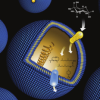
David Savage (UC Berkeley) presented work regarding carboxysomes (protein-enclosed bacterial organelles). Synthetic organelles could be constructed that would be useful for a variety of cellular activities, including improving on current biological processes like RuBisCO leakage (an enzyme involved in the first major step of carbon fixation). Synthetic organelles could be developed based on previous work characterizing carboxysomes with shell and cargo fluorescent tagging [6], and recent work improving the stability and well-formedness of shells through shell-protein modification, particularly by adding a novel protein, CsoS1D, discovered by Cheryl Kerfeld’s lab (UC Berkeley and LBNL) [7,8].
Wallace Marshall (UCSF) discussed the importance of understanding and controlling organelle size, shape, and composition, the trade-offs between lipid and starch storage and controlled metabolism, for example. Tuning flagellar length could be important in the understanding and remedy of ciliary diseases [9], and experimental research suggested in one case that the quantity of LF4 (long flagella) protein being injected could be the key fulcrum of the control system. Organelle-tuning could have a broad range of useful applications, for example tuning up and down the ability of vacuoles to tolerate toxic compounds.
Applying synthetic biology to drug designMichelle Chang (UC Berkeley) pointed out how the toxicity of fluorine makes it useful in drugs, and perhaps synthetic biology techniques could improve its effectiveness. A naturally-occurring fluorine-specific enzyme (FIK) was examined that demonstrated dramatic improvement in recognizing molecules [10]. Leor Weinberger (Gladstone Institute and UCSF) discussed synthetic viral circuits called therapeutic interfering particles (TIPs) that have been shown to reduce HIV/AIDS infection rates. The TIPs replicate conditionally in the presence of the pathogen and spread between individuals [11].
Developing foundational technologiesHana El-Samad (UCSF) discussed the benefits of using hybrid biological and computer-based systems, where software algorithms were used to control a gene expression circuit’s behavior in real-time through a light-responsive module [12].
John Dueber (UC Berkeley) discussed the benefits of controlling the volume of enzymes expressed in cells, optimizing flux through cells. A desirable tool for this is combinatorial libraries to manage expression in multi-gene pathways. Further, when there are flux limitations in the pathway that cannot be managed with gene expression, there has been some interesting work building synthetic scaffolds to co-locate pathway enzymes around the areas of interest [13].
Nathan Hillson (LBNL) presented ways to automate and speed up the engineering cycle (design-build-test) with a component repository, selected components, and assembled components. Software design automation for assembly tools were discussed such as the
JBEI-ICE repository platform and the
GLAMM design tool.
References- Liu CC, Arkin AP. The case for RNA. Science. 2010 Nov 26;330(6008):1185-6.
- Lam BJ, Joyce GF. An isothermal system that couples ligand-dependent catalysis to ligand-independent exponential amplification. J Am Chem Soc. 2011 Mar 9;133(9):3191-7.
- Liang JC, Bloom RJ, Smolke CD. Engineering biological systems with synthetic RNA molecules. Mol Cell. 2011 Sep 16;43(6):915-26.
- Chen YY, Jensen MC, Smolke CD. Genetic control of mammalian T-cell proliferation with synthetic RNA regulatory systems. Proc Natl Acad Sci U S A. 2010 May 11;107(19):8531-6.
- Lucks JB, Qi L, Mutalik VK, Wang D, Arkin AP. Versatile RNA-sensing transcriptional regulators for engineering genetic networks. Proc Natl Acad Sci U S A. 2011 May 24;108(21):8617-22.
- Savage DF, Afonso B, Chen AH, Silver PA. Spatially ordered dynamics of the bacterial carbon fixation machinery. Science. 2010 Mar 5;327(5970):1258-61.
- Roberts EW, Cai F, Kerfeld CA, Cannon GC, Heinhorst S. Isolation and Characterization of the Prochlorococcus Carboxysome Reveals the Presence of the Novel Shell Protein CsoS1D. J Bacteriol. 2011 Dec 9.
- Klein MG, Zwart P, Bagby SC, Cai F, Chisholm SW, Heinhorst S, Cannon GC, Kerfeld CA. Identification and structural analysis of a novel carboxysome shell protein with implications for metabolite transport. J Mol Biol. 2009 Sep 18;392(2):319-33.
- Wemmer KA, Marshall WF. Flagellar length control in chlamydomonas--paradigm for organelle size regulation. Int Rev Cytol. 2007;260:175-212.
- Weeks AM, Coyle SM, Jinek M, Doudna JA, Chang MC. Structural and biochemical studies of a fluoroacetyl-CoA-specific thioesterase reveal a molecular basis for fluorine selectivity. Biochemistry. 2010 Nov 2;49(43):9269-79.
- Metzger VT, Lloyd-Smith JO, Weinberger LS. Autonomous targeting of infectious superspreaders using engineered transmissible therapies. PLoS Comput Biol. 2011 Mar;7(3):e1002015.
- Milias-Argeitis A, Summers S, Stewart-Ornstein J, Zuleta I, Pincus D, El-Samad H, Khammash M, Lygeros J. In silico feedback for in vivo regulation of a gene expression circuit. Nat Biotechnol. 2011 Nov 6;29(12):1114-6.
- Whitaker WR, Dueber JE. Metabolic pathway flux enhancement by synthetic protein scaffolding. Methods Enzymol. 2011;497:447-68.


 Email me
 Twitter
 Subscribe to blog
 MS Futures Group
 Data Visualization Wiki
 Economic Fallacies

