Showing posts with label second life. Show all posts

Sunday, April 01, 2012

Virtual worlds update - 1.7 b ww accounts

Virtual worlds – there’re not dead yet!! In fact the opposite is true. Virtual worlds have passed out of the spotlight in some regards but growth persists, with a heavily youth-oriented userbase. According to UK-based virtual world market research firm KZERO, there were 1.7 billion worldwide registered users of virtual worlds as of the end of 2011. This was more than double the under 800 million users at the end of 2009. As Figure 1 indicates, 97% of these accounts are currently held by users 25 years old and under.

Figure 1: Virtual world account holders by age tier as of December 2011.

On average, users have four avatars and are active in multiple virtual worlds. Habbo Hotel and Second Life are still well-known virtual worlds, the latter with 20 million regular users. Further, over 100 open sim grids are running using Second Life’s platform software, one of the larest of which is the education-focused Reaction Grid. Entertainment, socializing, and education continue to be application areas of focus in virtual worlds. Premium subscriptions, and in-world advertising and product placement, as well as virtual product and service sales remain the business model.

Sunday, December 21, 2008

Top 10 Computing Trends for 2009

Here is a quick list of my top computing and communications predictions for 2009 ranging from smartphones to supercomputers.

1. Smartphone AppMania continues
The explosion of application development on smartphone platforms like the iPhone and G1 continues, particularly in location-based services, social interaction and gaming. More computer science departments offer smartphone application development classes. There is more standardization of USB, earphone and other ports. U.S. ARPU is over $100/month.

2. Twitter is the platform
Despite renowned technical glitches, thousands more flock to messaging-leader Twitter and the fastest-growing user group of the microblogging notification system is non-human tweeters using the service as a data platform, example: Kickbee. Web 2.0 continues to bring back network computing, turning the web into the computer and human and object-based messaging becomes the new RSS.

3. Minis go mainstream
Mini PCs such as the Asus Eee PC, MSI Wind and Dell Inspiron continue to proliferate. Minis are fingertip candy; a travel machine for the on-the-go tech-savvy and too cheap to not be affordable for others at $200-$400.

4. Supercomputers achieve 8% human capacity
With IBM’s RoadRunner and Cray’s Jaguar running at just over 1 petaflop/s currently, the world’s fastest supercomputers could reach 1.5 petaflop/s in 2009 (unconfirmed results here), about 8% of the total processing capacity of the average human.

5. Chips: 32nm node rolls out amidst sales declines
Intel rolls out its 32nm node 1.9 billion transistor chip despite worldwide industry sales declines. Gartner forecasts a 4% decrease in chip sales in 2008 vs. 2007 and a 16% decrease in chip sales in 2009 vs. 2008. The biggest speedups continue to come from hardware, not software, and there could be additional breakthroughs in memory (flash, NRAM), magnetic disk storage, batteries and processor technology.

6. iWorld persists
The 200 millionth iProduct is sold before Apple’s CEO succession plan is in place.

7. WiMAX roll-out still stalled
WiMAX services could roll-out to 1-2 cities beyond Baltimore by year-end if Sprint and Clearwire’s operational and legal challenges are resolved. WiMAX would help to stratify connectivity offerings with a recession-attractive price point and bandwidth package (2-4 Mbps download, 1 Mbps upload speed; 6 month introductory price of $25/month, then $35/month).

8. More flexible media consumption models
More models for flexible on-demand pay/free video content viewing are launched for Tivo, Netflix, DVR, media PC and Internet consumers.

9. Video gaming grows
Video game titles, types and hours growth continues as escapism and low-cost entertainment options flourish.

10. Extended use of virtual worlds
Virtual world penetration and proliferation continues (Sony’s recent launch: PlayStation Home) at a slow and steady pace for both entertainment and serious use. The largest platform, Second Life, saw a 50% year-over-year increase in total hours and a 100% year-over-year increase in land ownership (much less exposure to virtual subprimes), and this rate of growth could easily continue in 2009. In the natural evolution of the Internet, virtual worlds continue expanding from the 3 Cs (communication, collaboration and commerce) to more advanced rapid prototyping, simulation and data visualization.


Other advances that could be around the corner:


Still waiting, a few other (non-comprehensive) opportunities:

  • Semantic web
  • Natural language processing
  • VLT (very long-term) laptop batteries
  • Wireless power
  • Ubiquitous free Wi-Fi
  • Paper-thin reader for newspapers, eBooks and any printed content
  • Cognition valet and other AI services

Sunday, June 01, 2008

Next steps for virtual worlds

Interest in virtual worlds is growing, platforms are proliferating and virtual commerce continues to rise but there are several key steps needs to reach the next level: expanding awareness of virtual worlds uses, providing technical interoperability and establishing a financial payment network.

1. Marketing - virtual worlds are not just for recreation
Conceptually, there is a marketing problem. The popular belief, even by technology professionals, is that virtual worlds are exclusively for recreational use, and even more narrowly, that they are children's video games. This stems from three factors: the vast popularity of teen and pre-teen virtual worlds, the fact that this market segment is making the most money in the virtual worlds space and some high profile acquisitions like Club Penguin by Disney in Aug. 2007 for $700m. Maybe this is what happened with the wheel in Peru; it got defined as a children's toy early on and the greater extensibility of the technology went unrealized.

Enterprise Virtual Worlds
Virtual worlds are the natural evolution of the Internet and one of the biggest potential uses is for enterprise applications. Enterprise virtual world killer app #1 is videoconferencing. Companies spend hundreds of thousands of dollars annually on video-conferencing. This can all be replaced with the free infrastructure of virtual worlds, and even improves on the traditional methods as participants have higher levels of engagement and use virtual world workforce collaboration apps.

Enterprise virtual world killer app #2 is the application presentation layer. Virtual worlds are the obvious next generation front-end to any data application. Exponentially more information can be seen at a glance and perceived immediately through visual image rather than read and processed (example: Bashiba). Problem drill down and resolution is also quicker and more effective. Many companies are moving to virtual control centers as the front end to their data applications. IBM features green data centers for both internal and client use to provide lower-cost improved control over nationwide data centers and remote process administration (SLurl). Facilities manager Eolus integrates SAP in the back-end with virtual world platforms in the front-end, representing multiple dimensions of information in a 4-tier virtual map for optimized management of global operations.

Enterprise virtual world killer app #3 is eCommerce. Virtual worlds are the obvious next generation platform for eCommerce, with detailed visual representations of products available for inspection and avatar-based navigation instead of locating items through menus. This trend will strengthen as more cell phones are smart phones and mobile virtual worlds clients are available.

For more information and images of Enterprise Virtual Worlds applications, please see Slides 16-22 of this presentation.

2. Interoperability
The 60+ existing virtual worlds platforms are isolated silos (lists of virtual world platforms: Virtual Worlds Review and VirtualWorldsNews). It is as if every website used a different flavor of html and required a separate login identity. There are two levels of the interoperability challenge. First, export and import functionality needs to be standard between 3d modeling software programs (3DS Max, Maya, etc.) and into virtual worlds platforms. Second, avatars and inventory need to be portable across worlds. One idea is to have a namespace registry system and avatar servers like DNS servers. Open-source platforms like realXtend and OpenSimulator are starting to emerge but do not have the traffic of the vast established worlds like Second Life, There and Entropia Universe.

3. Micropayment Network
The third vital step in moving virtual worlds forward is the establishment of a micropayment network. The breadth and amount of activity could be substantial. The network would be like PayPal, spanning any and all gaming and virtual world platforms, and could also handle web-based and brick-and-mortar transactions. The regulatory hurdles are sizable particularly given the international dimension but one possibility could be harnessing the emerging cell phone payment networks for virtual world micropayments.

Sunday, February 10, 2008

Data visualization in Second Life

Virtual worlds are the next generation of the Internet, its natural evolution as a communications, commerce and information platform. Buildings and exhibits have been built, but the medium is mainly only alive through avatars. Virtual worlds could be mirror worlds, comprised of live streaming data, ready for constant user interaction and manipulation.

Streaming data into virtual worlds and making tools for its visual display is an obvious next step.

Virtual world data visualization tools are needed
An open source data visualization tool suite for virtual worlds is needed, something to be the Many Eyes or Swivel of Second Life and other platforms.


There are some real-time interactive data displays (NOAA's real-time weather simulation, 3d stock charts, LAX air traffic data and IBM's virtual network operation centers) in Second Life but not tools for loading and manipulating custom data sets. Existing static exhibits of scientific and other tools could be enabled to accept data streams for real data analysis.

Standard web data formats like Google Docs spreadsheets could underlie virtual worlds data visualization tools. There should be web-based spreadsheets that can call data that updates in real-time. For example, stock portfolios calling real-time data can be made at various websites but a stock price data element cannot be called in a Google spreadsheet or a web-based data visualization tool like Many Eyes or Swivel. Please comment if you know of tools that do.

Advantageous properties of virtual worlds
The idea would be to use unique virtual world properties (real-time updating, data-streaming, camera zooming, interaction, 3d world aspects) to make data display and interaction tools that are complementary to traditional data visualization software. Some interesting uses could be:
  • Sending microscopy results directly into virtual worlds to be digitally imaged; e.g.; have real SIMS microscopy data populate Second Life SIMS microscope displays in real-time as people are running experiments.
The SIMS microscope in the clean room on Nanotechnology Island in Second Life, why not feed real data to the microscope in real-time?
  • Viewing hundreds of scientific experiment results simultaneously on massive data walls, using the zoom functionality to look closely or far away at multiple levels of detail

University of Michigan pharmacokinetics professor Gus Rosania's data walls, further described in his open science blog

  • Running thousands of simultaneous simulated experiments more efficiently than in physical reality
  • Allowing colleagues and classes around the world could observe the results, participate and collaborate in real-time.
More information is available at the SL Data Visualization wiki or feel free to email me if you are interested in data visualization in virtual worlds.

Thursday, January 17, 2008

Capital markets 2.0

In the last few years, a variety of innovative capital markets have arisen to supplement and extend traditional large institutional capital markets. The new markets fill niches of demand for capital and investment, and allow greater granularity of investment information and capital direction. The currency may be money, reputation, ideas, social good or any combination of these. Some of the new capital market vehicles include:

The first category, virtual world economies, is burgeoning and complex and provokes an interesting debate about how these new market vehicles should evolve and integrate with traditional economies. The virtual worlds There and Entropia Universe have had a hands-on approach to economic regulation, for example approving parties for in-world banking licenses. On the other hand, the virtual world Second Life has been more laissez-faire at the outset but then stepped in with prohibitions where self-regulation has been inadequate. Gambling was outlawed in July 2007 and now banking activity has been effectively outlawed:
"As of January 22, 2008, it will be prohibited to offer interest or any direct return on an investment ... without proof of an applicable government registration statement or financial institution charter. (Full text here)"

Risk, Cost of Capital and Acceptable Return
One value of the new markets is that they provide capital in cases that are less attractive or irrelevant to traditional financing entities. These situations often have dramatically different risk, growth and timescale profiles than traditional investments and are conceptually similar in many ways to doing business in a high risk country.

The risk is higher, so the return too must be higher in compensation. Looking at annualized interest rates may not make sense in the accelerated time environment of virtual worlds where the economy (as measured by land and money supply) is currently growing 6% per month in Second Life.

What is an appropriate cost of capital? Anecdotal interest rates on Second Life loans have ranged from 7% per month to nearly 50% per month, and experienced a 20-30% default rate. This is the cost of capital for people who do not want to declare their physical identity details or seek other means of capital. In the physical world, it is not unusual for payday lenders to charge 300%+ per year to cover their high default rates. Peer-to-peer lender Prosper found that U.S. state-based usury laws did not allow the site to charge enough interest to cover subprime borrower defaults.

Virtual economies are chided for not having sustainable interest rates at the same time as the subprime lending crisis is crescendoing through physical world capital markets, itself a reprise of the 1980s RTC crisis.

Law, Regulation and Jurisdiction
The appropriate norm is to comply with traditional governing entity rules and laws, including being flexible with business models in order to do so. Peer-to-peer lenders had to structure their businesses in specific ways to obtain licensing and comply with U.S. usury laws which vary by state.

Virtual world economies will likely need to be even more innovative to receive physical world approvals. The pervasively global and anonymous virtual world medium suggests that geographically-based physical world regulation will be challenging to apply in reasonable and effective ways. However, anonymity is probably less important as an attribute for virtual capital seekers, as when a benefit is conferred, people are generally willing to give up anonymity. For example, peer-to-peer lenders found that people are perfectly willing to have their credit reports posted publicly on the Internet in return for the ease of potentially obtaining a loan.

In addition to traditional law and regulation, new capital markets may face another layer of compliance in the form of specific in-medium practices that develop. Complying with in-medium practices is important both reputationally and in the instance of in-medium adjudication and dispute resolution mechanisms.

Sunday, December 09, 2007

Virtual world killer apps

Virtual worlds seem to be distinct from the Internet but are really the natural evolution of the web as a communications, commerce, information and computation medium; a move to real-time 3D interaction from 2D text.

Virtual worlds are no longer exclusively recreational, they are becoming increasingly routine for a wide range of professional activities. Will Sun Microsystems be the first to announce their corporate earnings simultaneously in-world as they do now on CEO Jonathan Schwartz's blog?

There are about 50 virtual worlds in various stages of funding, launch and adoption. Linden Lab’s Second Life is the largest and most complex with an economy in excess of $1.5m USD per day. With the surge in activity, killer apps are starting to emerge.

Consumer Killer App: 3D Immersive Shopping
Shopping could be the killer app of virtual worlds for consumers, just like email drew people to the Internet. Shopping, not in the sense of avatar couture, coiffeur and custom animation, although this is an important sector of the virtual world economy, but in the sense of physical-world retailers having virtual showrooms for customers to review and potentially purchase their products in a 3D visual immersive way, everything from cars to furniture to electronics to tax services to books and music.

Steelcase furniture showroom
Click here to teleport

EOLUS/SAP experimental shop
Click here to teleport


Business Killer App: the Interface
For businesses, it is not about the application but the interface, the interface is the application. Virtual worlds are the modern functionality-extending overlay for any existing application, a 3D real-time information-rich collaboration environment. Some examples include IBM's virtual NOC business, constructing VNOCs for their own and client operations, Intel's in-world Dev Zone developer network meetings and Coke's "Virtual Thirst," Cisco's "Connected Life" and Osram Lighting's "One Million Dollar Idea" virtual world creativity campaigns.

IBM Watson's VNOC (Virtual Network Operations Center)
Click here to teleport

Pervasiveness
Due to resource consumption, virtual worlds are not yet used pervasively by most people; they are an application to log into intermittently, just like the Internet was before broadband. It could be in five years that computer processing power and broadband speeds, including on the mobile platform, make virtual world pervasiveness possible. Even before then, it will probably be as natural to book an airline ticket in-world via a travel sim as it would be to go to Orbitz.

How could progress not be underway in an evolution from users to residents?

Monday, October 29, 2007

Unregulated stock exchanges in Second Life

A variety of unregulated economic activity has been occurring in the virtual world Second Life. In-world banks sprang up a few years ago and have experienced considerable volatility, mostly closing and reorganizing, for example the high profile collapse of Brazil-based Ginko Financial in September 2007. Some banks have extended their activities into in-world securities. Though eventually repealed in real life, Glass-Steagall provisions could be helpful in preventing conflicts in developing virtual world economies.

There are at least three stock exchanges currently operating in Second Life, the SL Capital Exchange (physically based in Syracuse NY, USA) with 20 listed companies, the World Stock Exchange (physically based in Australia) with 15 listed companies and the recently launched Ancapex (physically based in New Hampshire, USA) with three listed companies. There is even a Second Life Exchange Commission to provide standards of performance, operations and ethics for in-world market participants.

Listed companies have not provided detailed financial statements (much less third-party audited financial statements), have not indicated a dividend policy and do not have RL (real life) professional CFO/CPA personnel. A prospectus is sometimes provided (example) and the RL's CEO name and location may be optionally provided.

Nonexempt issuance
Considering offering and purchasing activity in the U.S., the stocks do not appear to qualify for any U.S. securities registration exemptions. The only nod to RL securities laws is a disclosure at SL Capex, claiming that the securities are a fictitious simulation, however given the easy conversion of Linden$ to USD and legal precedent in this situation, it is likely that the Second Life activity would be deemed securities issuance.

Are the SEC in the U.S. and other corresponding national securities regulators likely to take an interest or is the issuance too small, the venue too novel and the cross border challenges too great? If there is enough $ value of harm incurred by investors, an investor could file a complaint. But to whom? To securities authorities in their country, to Linden Lab, to the securities regulator of the exchange or listed company, to the Second Life Business Bureau or other in-world adjudication bodies?

While creating virtual world analogs to those in the physical world is to some degree laudable, the attempts might be ultimately more successful by incorporating a greater balance of physical world regulation and protection mechanisms to build a sustainable ecosystem.

Thursday, October 11, 2007

Second Life reaches 10 million residents

Exemplifying the electric growth of Web 2.0 companies, the virtual world Second Life has grown from under 1 million residents to over 10 million in a little over one year.

While 10 million residents is perhaps not the best measurement metric for the world’s success (users may have multiple resident accounts and not more than 10% of them so far do anything more than have one quick look around), it is still an important milestone.


Other Second Life indicators reflect vigorous health, for example, a robust economy exceeding $1 million USD per day and a routine concurrency (the number of residents in-world at any time) of 30,000-40,000 with a new peak concurrency of 50,000 reached for the first time in early September 2007. Other statistics are available here.

The virtual world space is itself burgeoning, with 10-20+ worlds now available or about to launch targeted at different age segments (pre-teen, teen and adult). Second Life, There, ActiveWorlds, Multiverse and Kaneva are the best known, several of whom are coming together to develop standards for avatar, object and economic transfer between worlds.

Another growth indicator is the industry gatherings, the second meeting of the Virtual Worlds conference, Oct 10-11 in San Jose CA, attracted over 1,000 attendees, nearly doubling from the first conference. The third annual volunteer-run Second Life Community Convention, Aug 24-26 in Chicago IL, also attracted a crowd of about 1000.

Diverse Participants and Applications
Perhaps most exciting is the broad audience and variety of applications that virtual worlds are attracting; entertainment, enterprise, education, non-profits, governments and individuals are all exploring the medium amidst a flurry of both positive and negative press. Groups of every sort are coming to virtual worlds to collaborate in richer ways than have been possible previously. For example, below is a sim featuring LAX airport traffic data visualization.

Source: Daden Prime

Sunday, September 23, 2007

MindModding

Many human characteristics are normally distributed including height, weight, intelligence, nose size, irritability, friendliness, compassion and hormone levels.

If people could choose…
If individuals were given the ability to choose the settings of their personal characteristics and analytes by using an analog of the Edit Preferences menu slider, either on a one-time or ongoing basis, what would they be likely to do? Would most people opt to stay the same, move closer to the median or experiment by selecting an outlier position?

The drive to normalize, people choose brown…

Despite the current demonizing and illegality of human enhancement in athletics, the practice is widespread. In other venues, there are also observable examples of the embracement of mindmodding and Stephen Jay Gould seems to be wrong again, this time in the claim that the median is not the message. Where selection possibilities exist, so far individuals have been reaching for the deep herd in the middle of the bell curve, often acquiescing unthinkingly to corporate marketing.

1. Hormone replacement therapy
Prescriptions continue to increase for both estrogen replacement therapy and testosterone replacement therapy despite medical studies indicating increased heart disease and other risks for women and no realized physical benefit of testosterone therapies for men. As they have for eons, people will pay for and take health risks to “enhance” their physical state to some perceived ideal, even when contradictory medical evidence exists.

It seems likely that more hormone management therapies with improved risk and efficacy profiles will be offered over time. One example is those of Dr. Louann Brizendine’s Women's Mood and Hormone Clinic at UCSF which are focused on ongoing state management for all ages. Hormone management such as continually suppressed menstruation can be useful in normalizing personal levels during the course of the day, week or month, diminishing rather than enhancing the effects of hormones.

Distinctly different flavors of anti-aging can be envisioned: the disastrous scenario of senescent male heads of state running around with the testosterone levels of 20 year olds hastening existential risk for all of humanity contrasted against the beneficent scenario of Aubrey de Grey’s mitochondrial DNA mutation restoration, Alzheimer’s plaque remediation biotechnology and other SENS approaches.

2. Virtual Worlds
Another example of what people actually do when given the opportunity to modify physical characteristics is visible in the thousands of avatars residing in the virtual world Second Life. All aspects of avatar representation can be modified, however, a huge cluster of brown (e.g.; average) can be seen in the age, height and muscle tone of avatars, with a much smaller cluster for furries and a few longtail outliers for unique appearance.

Should people be allowed to choose…
As long as personal characteristic modification is not injurious of the self or others, it would be difficult to conclude other than that it is an acceptable personal freedom. The only tempering aspect seems to be the usual income dispersion argument as only higher income tiers can initially afford these therapies as they are not covered by insurance. The world of the future will probably be like virtual worlds, with setting modification built into or adjunct to physical corporeality.

Is there any role for regulation?
What if someone wanted to play with a very high aggression setting? People can actually do this now except that cultural and societal norms prevent more divergent behavior. In fact, the ability to manage chemical and personality settings would vastly improve communicating with others and being productive in a group setting for some people. What about experimenting with and getting stuck in a lethal cocktail of depression, low esteem and remorse? Default resets would probably kick in before real harm could occur and these types of experiments could be interesting virtual reality experiences for individuals and a useful neurological tool for researchers.

Cure vs. enhancement and the evolving health system
A fundamental change is occurring as the role of the medical industry and medical professional is shifting from curing health impairments to providing enhancements. As enhancement therapies proliferate, there is a clear opportunity for new fields of enhancement counseling, customizing and habituation training to develop.

Sunday, August 19, 2007

Second Life Meta-Me

The experience of identity is often heavily influenced by physicality (race, gender, height, nose size, etc.). Virtual worlds such as Second Life offer freedom from physicality via unlimited self re-presentation opportunities.

So far, merely the surface of human creativity has been scratched as the majority of avatars are tall, fit, young and attractive which underlines both physical world inferiority sentiments and an unproductive focus on superficial aesthetics.

Meta-me
Virtual worlds could be used to visually represent another more abstract layer beyond physical appearance, the more important and meaningful parts of individuals such as values, actions, ideas and creativity. This could be facilitated by bringing existing Internet-based information into virtual worlds. Visual representations could be executed with shapes, size, coloring, accentuations, vibrations, etc., for example, the bigger the glow around the avatar, the higher the social capital. People might even want to represent themselves in the physical world based on some of these ideas.

Reality filters
Not only could there be a deeper granularity of self-representation but also filters for viewing others. Filters could be based on preference, literally blocking those with unattractive value systems, efficiency, seeing only those other avatars who also wanted to interact regarding certain topics like education, business, sex, singularity, science, etc., or other attributes.

Below are some suggestions for new ways of avatorial representation:

1. Profile-based avatars
Avatars are a visual expression of their profile tags, for example an extropian transhumanist singularitarian might look different from a vegan sustainable development social worker from a politically conservative attorney, but maybe not. Interest indicators could be amalgamated or cycled through in kaleidoscope fashion. The assumption is that social interaction could be enhanced with overt interest-signaling.

2. Reputation-based avatars
Avatars are an expression of how others see them, a visual representation of how they have been rated by others, in-world or as a consolidation of Internet reputation mechanisms such as eBay, Amazon, LinkedIn, Yelp, etc.

3. Idea-based avatars
Avatars are visual representations of the degree and quality of the person's ideas. This may not be able to be rendered until the underlying information is more explicitly captured, either self-evaluated or as another level of reputation. Amazon asks "Was this review helpful?" and a creativity evaluator could inquire "Were innovative and good ideas described here?"

4. Value system-based avatars
Avatars are a visual representation of a person's values. Value systems can be elicited in a variety of ways including as specified directly in a profile, determined from a set of questions, deducted from a log of Internet-based activities or abstracted from physical world activities such as purchasing, recycling, volunteering, exercising, etc. A means of obejective data collection would be important, barcodes/rfid would work in the case of purchases. Would this be tyranny or freedom? Certainly it would be optional and some people would choose to increase their social capital by broadcasting high-congruity lifestyles.

5. Presence-based avatars
RSS presence feeds are streamed into Second Life and aggregated into a visual representation of facebook, jaiku, pownce, twitter, wakoopa, blogging, emailing, texting, social music listening (pandora, last.fm, etc.) and other lifecasting activities. How close a representation of self would people perceive this to be? The essence of individuality is increasingly available on the Internet.

6. Real life Sims Online avatars
Extending the Sims Online game, in-world avatars could follow the same percentages of time spent on activities that humans do in the physical world, working, exercising, relaxing, socializing, eating, sleeping, etc. An invaluable tool for extrospection, the sim could be sped up to show the natural end states of one's current activities, and altered to see different outcomes (e.g.; a 1% increase in exercise leads to greater longevity).

Monday, March 26, 2007

Second Life reaches 5 million residents

Second Life reaches 5 million residents and a $1.65 million per day economy but its growth rate has slowed from a doubling every two months in both residents and economic activity. The chart below shows the population and economic trends since January 2006.


What is so exciting about Second Life that has attracted 5 million residents? Other statistics not reflected here would probably show more interesting patterns about the medium's usage such as an increase in time spent in-world, a growth in community-specific groups and an increase in corporate presence as more entities set up virtual offices including Coldwell Banker.

Web 3.D is about Community, Community, Community.
The richness of a virtual world platform like Second Life suggests why it is so successful. The Internet was a tremendous step forward as people with shared interests were able to find each other via usenet and email lists, mainly having 1:many relationships. Web 3.D virtual worlds allow special interest interactions to be much deeper and more intimate in a robust audio-visual and 1:1 way instead of a 2D text-based 1:many way.

In addition to more intimate interaction, virtual worlds offer more agency. One example is that people can fully govern how their appearance is presented. Interestingly, so far, instead of exploring more aspects of identity and representation, the vast majority of avatars appear in a great homogeneity of youth and beauty, making explicit the strong force of perceived appearance ideals in the physical world culture and recreating this in virtual reality. Then as art imitates life imitates art, the avatorial aesthetic cycled back out of a Second Life gallery into the physical world in a “13 Most Beautiful Avatars” exhibit at New York’s Rhizome gallery.

The interesting focus for Second Life now is not how many residents are there but the large variety of inventive things that they may be doing.

Thursday, March 15, 2007

Our avatars ourselves

As companies and other organizations take to immersive worlds, it may be that new employees are assigned an avatar and virtual office space along with their security card and computer. Blogging is now part of some job descriptions and soon employees may be encouraged to spend time in-world for both corporate socialization and professional collaboration purposes within and across corporate lines.

There is a lot of energy around synthetic environments including a full track of virtual world programming at this week's SXSW Interactive in Austin TX and at the upcoming Virtual Worlds 2007 conference in NY March 28-29. Second Life is sneaking up on 5m users and a $2m/day economy and There engine Forterra has its hands full with enterprise and government clients for custom enterprise applications as well as government and medical simulation and training exercises. If you are not in-world somewhere for your company, you can work as an extra in someone else's world. Sim exercises are populated by "external role players," a new and expanding job category which simultaneously underlines the marketability and necessity of tech-savviness and another step in the Yochai Benkler shift to an economy of distributed individual participants vs. industrialized entities.

Professional avatars will likely be influenced by corporate guidelines and norms regarding appearance and behavior, analogous to the physical world; at least virtual suits are more comfortable! One result of this could be an even more diffuse exploration of virtual identity as humans have a closet full of avatars for all of their different professional and personal virtual activities. Other new job categories are probably already proliferating: avatar imaging, avatar reputation management and consolidation...

Avatar and other content portability across the different emerging public and private virtual world environments is also a non-trivial matter. IEEE avatar translation protocols and standards as well as intra-world authentication services could help facilitate avatar portability. Poor portability could mean poor rendering which could result in miscommunication, prejudice and other dynamics which can be theoretically avoided with virtual worlds. An avatar discrimination lawsuit re: virtual world employment practices would not really be a hoped for milestone.

Tuesday, January 30, 2007

Bots challenge Second Life's 3 million residents

Second Life est arrivée. The big news is not about the immersive world's meteoric growth, now topping 3 million residents after having only 100,000 residents a year ago. Neither is Second Life's USD $1 million a day economy making a lot of news.

Interestingly, what is making news is the in-world tension between avatars and bots. With their quicker reflexes, land buying bots have been beating avatars to the punch in purchasing scarce real estate as it becomes available. The land bots are alt instances, additional avatars controlled by the same person in order to be able to access the First Land privilege extended to newbies. Philip Linden recently stated that people have on average 1.25 avatars, suggesting that there are about 500,000 in-world alts.

The real challenge is that the groundswell of new residents has overwhelmed Linden Lab's ability to provide new land resources, thereby triggering a huge digital scarcity. The bots appear to be an example of human ingenuity in attempting to obtain a scarce resource. The bots are not illegal however disgruntled residents have been lobbying Linden Lab to oppose bots and Linden Lab has agreed to look into the possibility of including anti-spam captcha technology in the land-buying process.

The Second Life land buying bot friction is a microcosm of how humans are likely to respond to AGI, particularly if resource scarcity is at all an issue. The strong need of the human to speak out on emotion-driven issues such as fairness, ethics, sentimentality and perceived mistreatment should not be underestimated.

Off to build my bots...

Thursday, December 14, 2006

Second Life exponentiates to 2 million residents

Today the virtual world Second Life welcomed its 2 millionth resident, exponentiating in growth from the 1 million resident mark on October 18, 2006 in less than two months and after barely having 100,000 residents at the beginning of 2006.

It is not Second Life’s 2 million residents, 10,000-20,000 of whom are in-world at any given time, nor its $650,000 per day economy ($237 million per year; $119 per capita, exceeding that of the Congo, Ethiopia and Burundi) that signals that the immersive world medium has arrived, but rather the existence of its opposition. The Register often highlights critical and problematic aspects of Second Life which it refers to as Sadville, for example citing "saddenfreude" and an analysis that time spend in Second Life contributes to global warming, as an avatar and a Brazilian consume roughly the same amount of electricity. (TV and media center electrical consumption was not mentioned.)

The brewing anti-SL movement has even moved in-world in hopes of better capturing SLer attention. The World Development Movement's anti-poverty campaign reminds passersby that there are still problems in what they refer to as "the Real World" such as a preventable child death every 3 seconds.

The ongoing presuppositions of the anti-SL movement are strange. They seem to think that SLers are 1) responsible for and 2) capable of contributing to world-problem solving in some unique way that TV watchers for example are not; and that 3) SLers are in fact not working on physical world problem solving in the physical world or via Second Life although there is much evidence to the contrary (such as the awareness raising Darfur sim where SLers can experience the refugee camp experience more closely).

When was the last time TV watchers or online Bix contest participants were blasphemed for watching TV or surfing the web instead of working on the world’s problems in their relaxation time?

Saturday, December 09, 2006

Mainstream is not wowed by Second Life

Second Life is bursting at the seams - the immersive world is due to reach 2 million residents next week and has a burgeoning economy transacting over $650,000 worth of virtual goods and services EACH day.


More and more people are starting to learn about Second Life and there is one repeatedly recurring reaction: that people are affronted, even insulted that others would spend time in an immersive world.

This reaction has been expressed at least twice on NPR, recently when there was a commentator from Harvard's Berkman Law Center for Internet and Society and earlier from a Columbus OH caller on the October 24, 2006 Talk of the Nation segment (minutes 15:30-16:19 of the 30:20 minute program)
"I’ve never called in before ... I’m pretty disgusted by the whole thing ... there are so many real problems in the world ... this creative energy could go towards solving a lot of the basic problems and things that are going on in Africa ... I’m sure there’s some good coming out of it ... like new car designs ... but I’m very surprised at the amount of energy that people spend on things like this when there are people that can’t even have clean water …"
Ignoring the conflicting presuppositions and logic breaches, the key point is that something is different about spending time in Second Life versus with those other uber-productive activities that people might be doing in stead. There are several levels on which to examine this conflict.

1) What is objectionable about being in Second Life as compared with other leisure exploits like watching TV, watching YouTube, reading a novel, or playing video games?

2) What is objectionable about spending time in Second Life as compared with other creative exploits such as painting, carving wood in the garage, programming software or designing a video game?

3) What is objectionable about making a living in Second Life (which requires developing and using advanced technical skills) as compared with other remunerative efforts such as being a corporate drone, pornographer or gambler?

The response is so quick, visceral and negative that it is as if people are feeling personal rejection. Second Life is somehow different than other activities, even different than video games such as World of Warcraft (despite World of Warcraft racking up far more hours per user), perhaps because of the story of what Second Life offers, an alternative reality, and that people who spend time there are in some part rejecting the physical world and by extension its participants, non-SLers.

However, like the book, one of the original immersive alternative worlds, and in fact like most technologies (e.g.; radio vs. records) most people will probably come to realize that online immersive worlds offer more not less and supplement rather than replace the reality they experience.


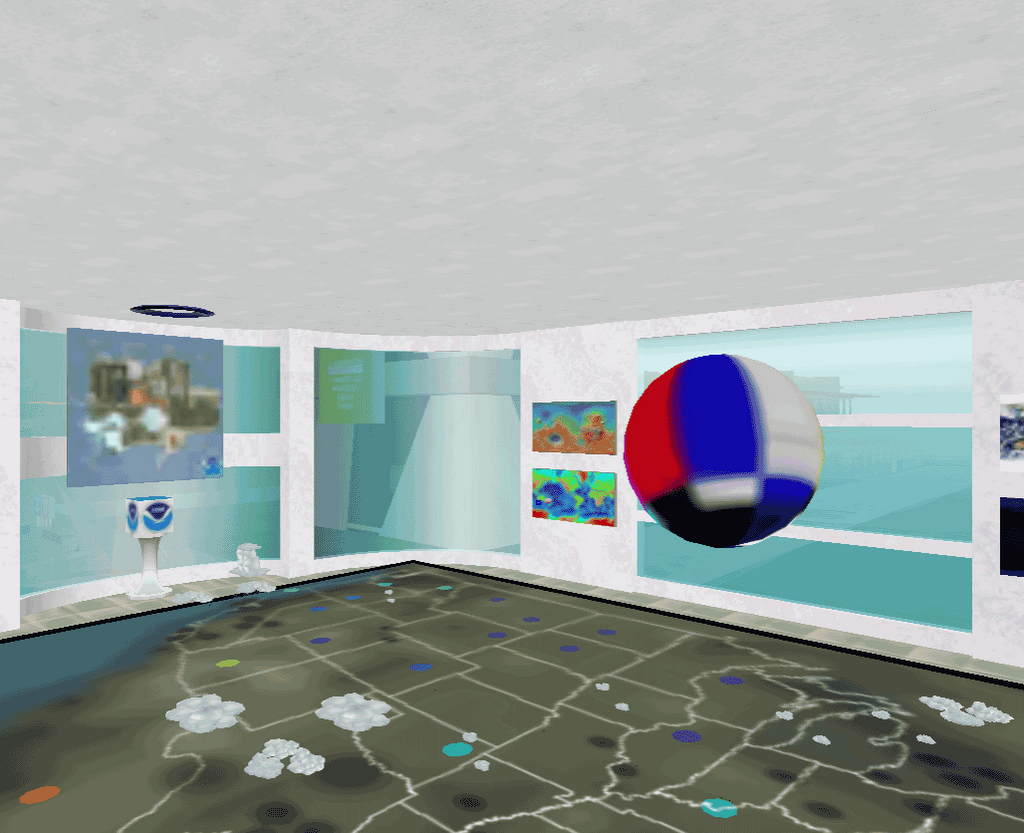
Real-time 3D weather data visualization from NOAA


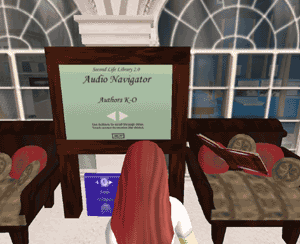
MLK "I Have a Dream" exhibit at the Second Life Library


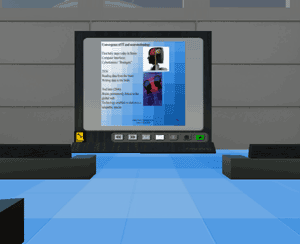
How does the brain work at Uvvy Island


Climate crisis education at the International Spaceflight Museum

Monday, October 16, 2006

Countdown to 1,000,000 Second Life Residents

Metaverse World leader Second Life barely had 100,000 residents at the beginning of 2006, and enjoyed strong growth in the first half of the year, reaching 300,000 residents at the end of June.

Then Second Life makers Linden Lab changed the registration policy such that no credit card information was required. The world's registered residents began to exponentiate, particularly helped by international residents swelling from 25% to 50% of total residents. Certainly residents do not correspond to unique users, as people may have one or more "alts," alternative avatars.

The Second Life website tracks that about one third of total residents have logged in within the last 60 days and that there are an average of 10,000 residents in-world during Second Life (US Pacific Coast) prime time hours. Private estimates suggest that about 10% of total residents are actually active in-world.

$7 million of transactions were run up by Second Life residents in July and there are a factor of magnitude more SKUs available in Second Life than at Wal-Mart (hello Long Tail).

On its current course, Second Life will reach the million resident mark well before the end of October and probably even before the end of the upcoming weekend. w00t!

Thursday, October 12, 2006

Life after Second Life

Why be content with Second Life when you can join ...the Multiverse Network... and access and interact in hundreds of virtual worlds all via one portal? Multiverse Network sees itself as the browser of metaverse worlds as users gatewaying through their site will have a universal sign-in, unified billing and centralized marketplace commerce. Interworld communication and travel is planned, as well as social mechanisms for world discovery and collection with personalized "world playlists,” user rankings and contests.

The few hundred development teams in the Multiverse Network's closed beta are finding the virtual world platform to be a unique, fun and high-functionality way to create MMOG worlds. The platform, soon to be in public beta, is being used for traditional game development (Force of Arms) as well as non-gaming work and learning applications (Project Mars which includes Mars-like gravity) and is described in more depth here.

The Multiverse Network's push in releasing worlds to end-user consumers in 2008 will likely trigger a further explosion in synthetic world commerce. One implication is that vendors making avatars, objects, textures, animation scripts, etc. for use in on-line worlds would no longer have to be tied to just one world, as the Electric Sheep Company, SLBoutique and Aimee Weber are to Second Life. Network content developers would have a panoply of potential customers and leveragable products and services.

Interworld connection will allow massive cross-world collaboration networks based on affinities to evolve; what would it be like to be with 1000 avatars online in the same space? While virtual space allows for smaller avatar form factors, communications challenges will likely abound with multi-channel chat streams erupting with some predictable asymptote of crowd participants.

Identity (that temporary and anachronistic human construct) will be different in a multiverse network with larger identity and avatar portfolios to manage (this theme is already occurring in Second Life whose nearly 1 million "residents" correspond to far fewer biological equivalents). Identity experimentation will be fun in multiverse worlds too, such as by being able to be multiple avatars in multiple worlds simultaneously and by permissioning avatars for independent tasks and activities with low-level AI methods.

Friday, December 31, 2004

New Business Models I

This is New Business Models I because there are so many new ones springing up and surpassing the old world business models with many more to come. Perhaps the most notable new business model du jour is Open Source, even espoused by IBM CEO Polisano in a recent suggestion list to the US government on the imperative of increasing American competitiveness.

The new business model addressed here is the customer creating not only the content but also the applications. Customers have long been creating content in Internet business models like eBay, hotmail, craigslist, and now in blogging sites, flickr and other photo sites, and online gaming worlds like Sims Online and Second Life. The next wave is the customers, really a new class of entrepreneurs or other innovators, creating the applications as well, using web services APIs provided by Amazon and increasing numbers of others.

There are many amazing things about this including:

1) the exponentiation - exponentially more content is and will be created than the company/initiator could possibly create. From the vast sea of content will arise attendant phenomenon such as the coalescing of new special interest groups / shared interest communities, and patterns, linkage and ultimately new means of value creation from the content / information,

2) the necessary accompanying innovation of new tools (especially automated) to manage, search and create content,

3) the rise new skills to exploit this medium, the application and tool creators, to create derivatives of derivative of derivative applications, the need for people to be proficient in these new skill areas or at least decide whether they would like to or not, and services like the early easy website development sites allowing one not to know html,

4) the way humans are getting to be more meta with computers, adding layers of intelligence in how machines talk amongst themselves to make human live more productive and easier. This is great in lots of ways but also represents humans getting another step farther removed from the operating, and really, control, of computers,

5) the additional democratizing of the trend - allowing more people the freedom to dream and create the applications that are fun interesting and worthwhile to them, not having to wait until their needs are a large and valuable enough corporate marketing opportunity. This StarBucks of software development facilitates the proliferation of individuality, self-expression, and fulfills self-actualization levels in Maslow's hierarchy,

6) and the stronger form of democratizing of the trend, economically, individual application development and launch as a flexible income generator nicely complementing a traditional job and other life activities that can grow, turn into multiple businesses and deliver economic freedom. This is an important emotional empowerment, to not work for someone else but to be an autonomous unit coming together for collective collaboration, training, feedback and other activities but remaining fundamentally self-directed not answering to another or another's machinations within a slow-to-evolve corporate hierarchy.